Paris Travel Guide
I was 36 years old the first time I went to Paris back in 2024. When I tell people that, they look at me like I look at people who’ve never read Harry Potter. But honestly? Paris had never really been on my list. I think I’d written it off as a place that existed online and in movies — all aesthetic and no substance. I don’t entirely know where that came from, but it perpetually kept Paris at the bottom of my list.
Then a solo trip window for a week opened, and I said why not? I could definitely eat my way through Paris for a week. So I went alone with zero expectations and I fell in love.
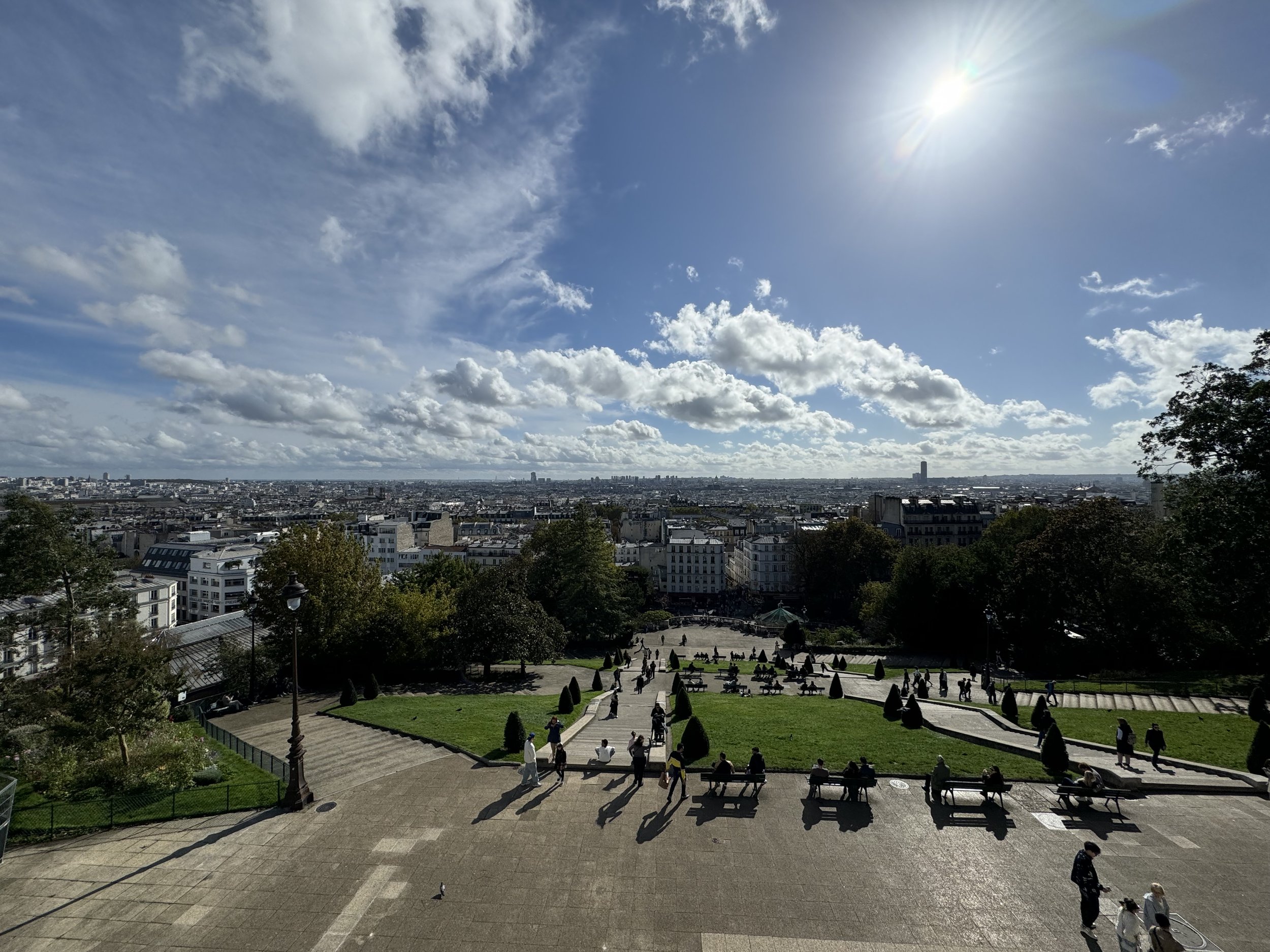
My first impression of Paris was exactly what you’d expect Paris to be — and I couldn’t believe that was actually true. The narrow cobblestone streets of Montmartre and Le Marais, the grand Haussmann boulevards lined with cream limestone buildings and wrought iron balconies, the Parisians who were so effortlessly fashionable walking down the street. Everyone talks about the je ne sais quoi of Paris and I always assumed that was just something people said. It’s not. I walked to Mamiche, got myself a croissant and a sandwich because I was starving, found a park, and sat down. I ate and I people watched — walking, sitting, just living their lives. People do that in LA too, I suppose. But there is something about eating a croissant in a Parisian park that makes the whole thing feel impossibly romantic.
When to Go
As a general rule, I prefer to travel during shoulder or low seasons.
For Paris, I think the sweet spots are September into early November and mid-March into May. Weather is generally milder, the city is less overrun, and Paris feels more like itself. Honestly, January and February are underrated. I’ve been in January and I’d go again — the city is quieter and everything feels more local. And if you go during soldes d’hiver (France’s government-regulated winter sales that usually take place the second week of January through the first week of February, where items are anywhere from 30% to 70% off), make sure to pack an extra suitcase. Yes, it’s cold, but also a perfect time to buy yourself a coat and some boots.
As for how long to spend in Paris — I’m a slow traveler and I’ll always advocate for slow travel. First time in Paris, give yourself at least five days, ideally a week. A week gives you room to recover from jet lag, wander around the different arrondissements, and still do a day trip to Versailles and/or Giverny without feeling like you’re sprinting. If you’re thinking about adding a jaunt to Lyon, Champagne, or anywhere else, plan for seven to ten days. There’s a lot of Paris to discover and you won’t get bored.
Where to Eat
Now, let’s get to the best part… where to eat. Everyone knows Paris is a food capital for a reason. French cooking has been the gold standard for pedigreed chefs for decades. But if I’m being honest, I’d always imagined it to be traditional and heavy — butter, sauces, rich everything. Which is funny, because I’d never reduce Italian food to just pasta or Japanese food to just sushi. But Paris somehow got a pass on my curiosity until I actually went.
My first trip, I went straight for the fancy places: the Michelin stars, the World’s Best list, the restaurants where you’re not just paying for the food but for the whole experience. I loved every minute of it. But going back, I wanted something different. I wanted the places locals were talking about, the bistros where Parisians meet friends for lunch. Because Paris isn’t just about the stars.
My list is nowhere near exhaustive. I have about 80 bookmarked pins on Google Maps of restaurants in Paris I haven’t tried yet but want to, and I keep adding more every time I come across somewhere interesting. What you won’t see here, though, are the viral and trendy restaurants that have built a following on aesthetics alone (you know which ones I’m talking about).
Splurge Worthy
Le Clarence
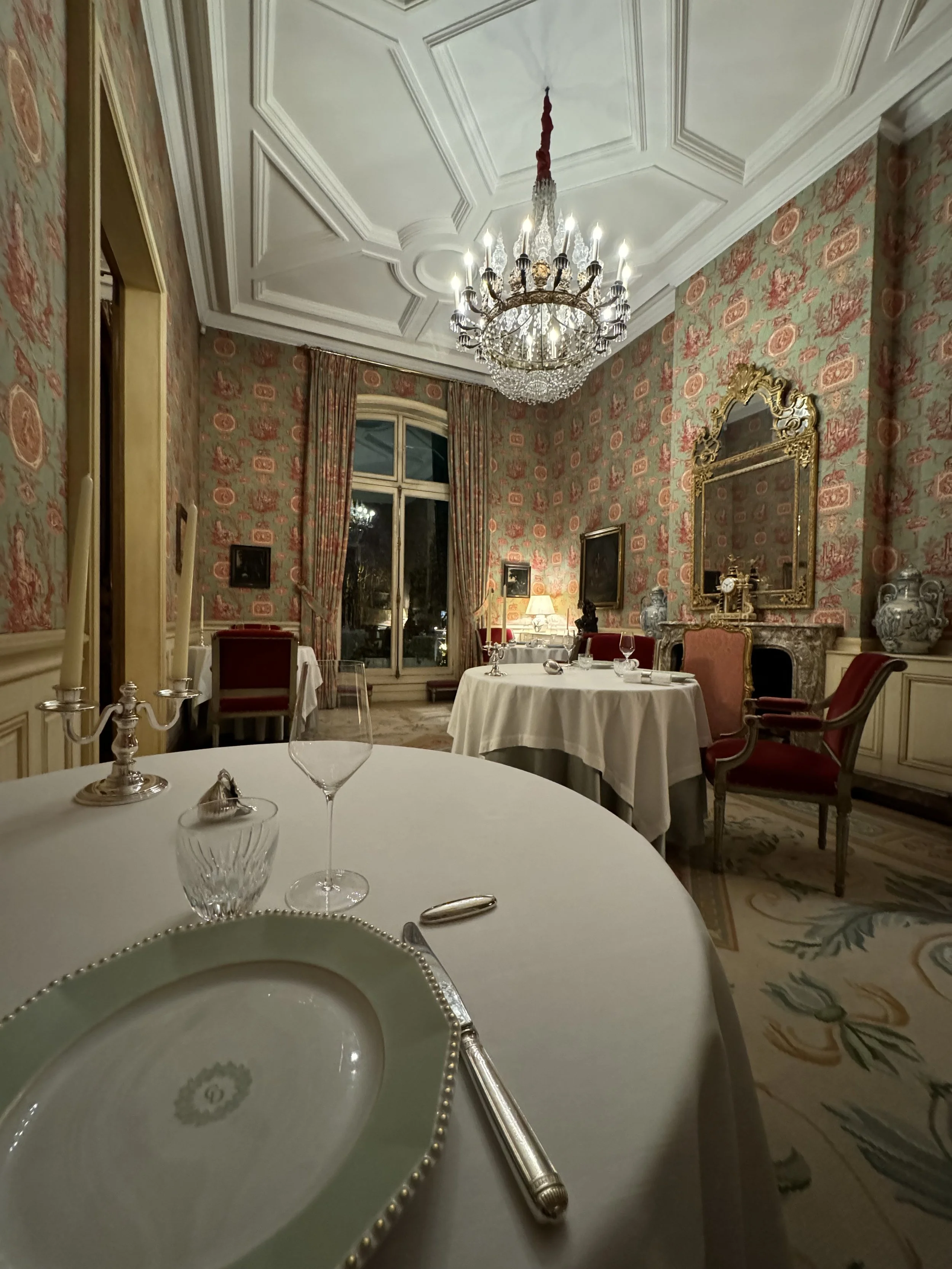
Le Clarence is high end French dining at its most unapologetic. Housed in a 19th century private mansion just off the Champs-Élysées, it is ostentatious in the best possible way. Gold engravings, chandeliers, wallpaper, and each dining room feeling like a different room in a wealthy aristocrat’s home. Walking in, I remember thinking: someone very rich and very French used to live here.
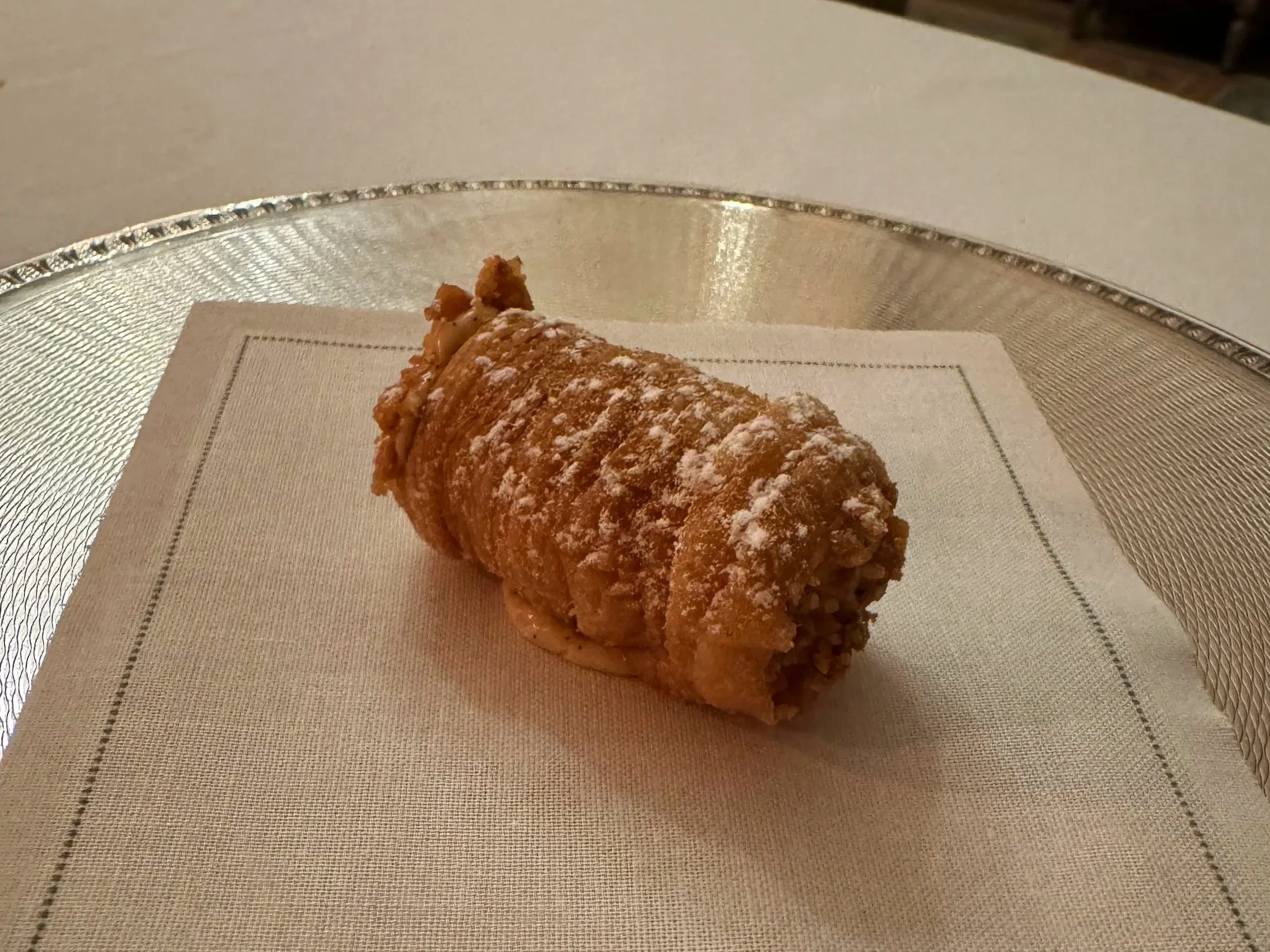
Notwithstanding the decor, the service is friendly and unpretentious. At the end of the night, I told my waiter that one of the desserts, a hazelnut cannoli, was so delicious and better than the one at Mike’s Pastry in Boston I’d had the week before that he graciously brought me two more. The food, under Chef Christophe Pelé at the time of my visit, was the kind of cooking that makes you put your fork down and just sit with it for a second. Or, in my case, type furious notes on my Notes app to document my thoughts on each dish.
Note: the kitchen has since transitioned to Chef Andrea Capasso, who came up through the restaurant under Pelé — worth knowing before you book, as the menu will have evolved.
2 Michelin stars; La Liste 2026
Arpege
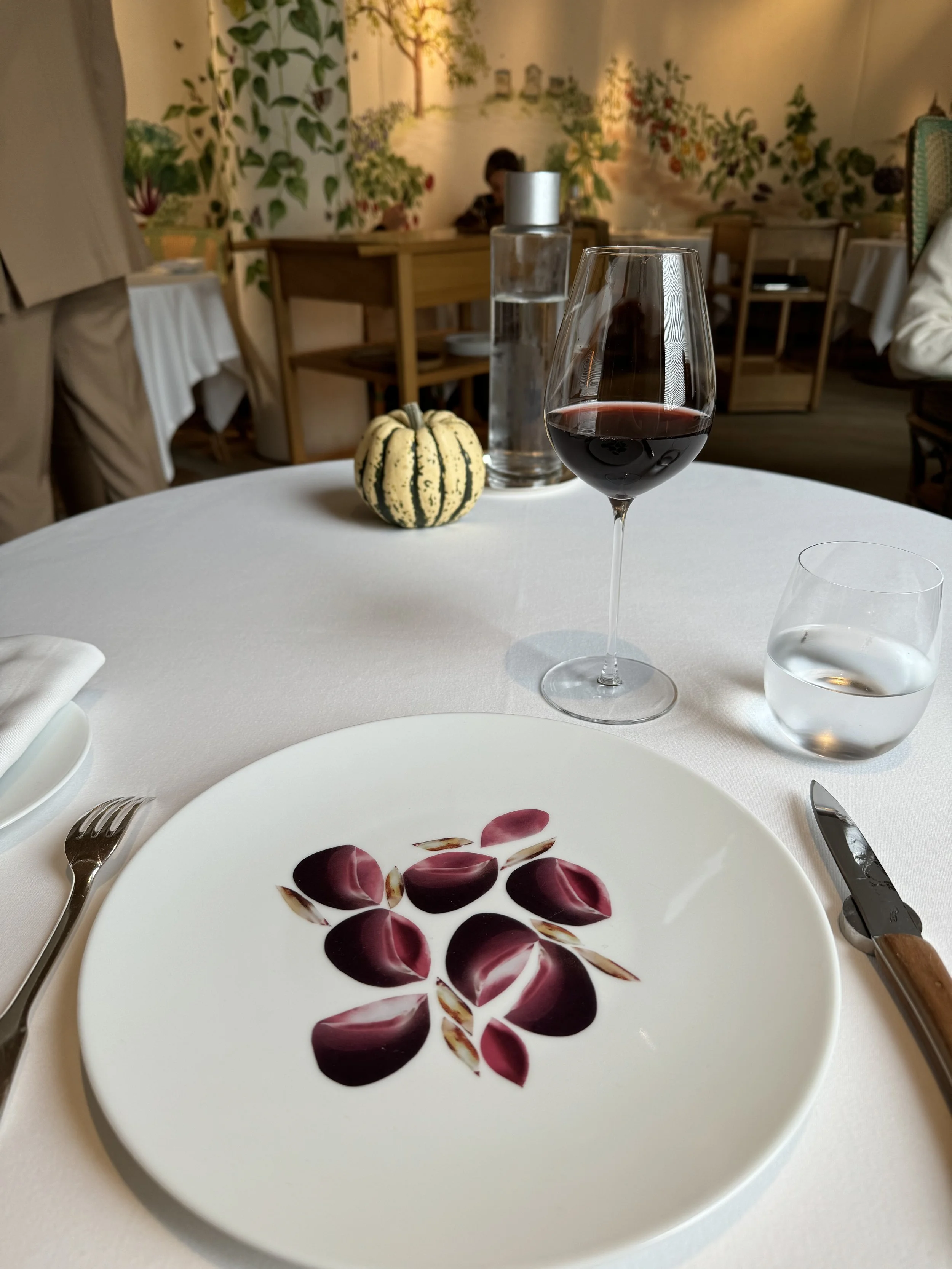
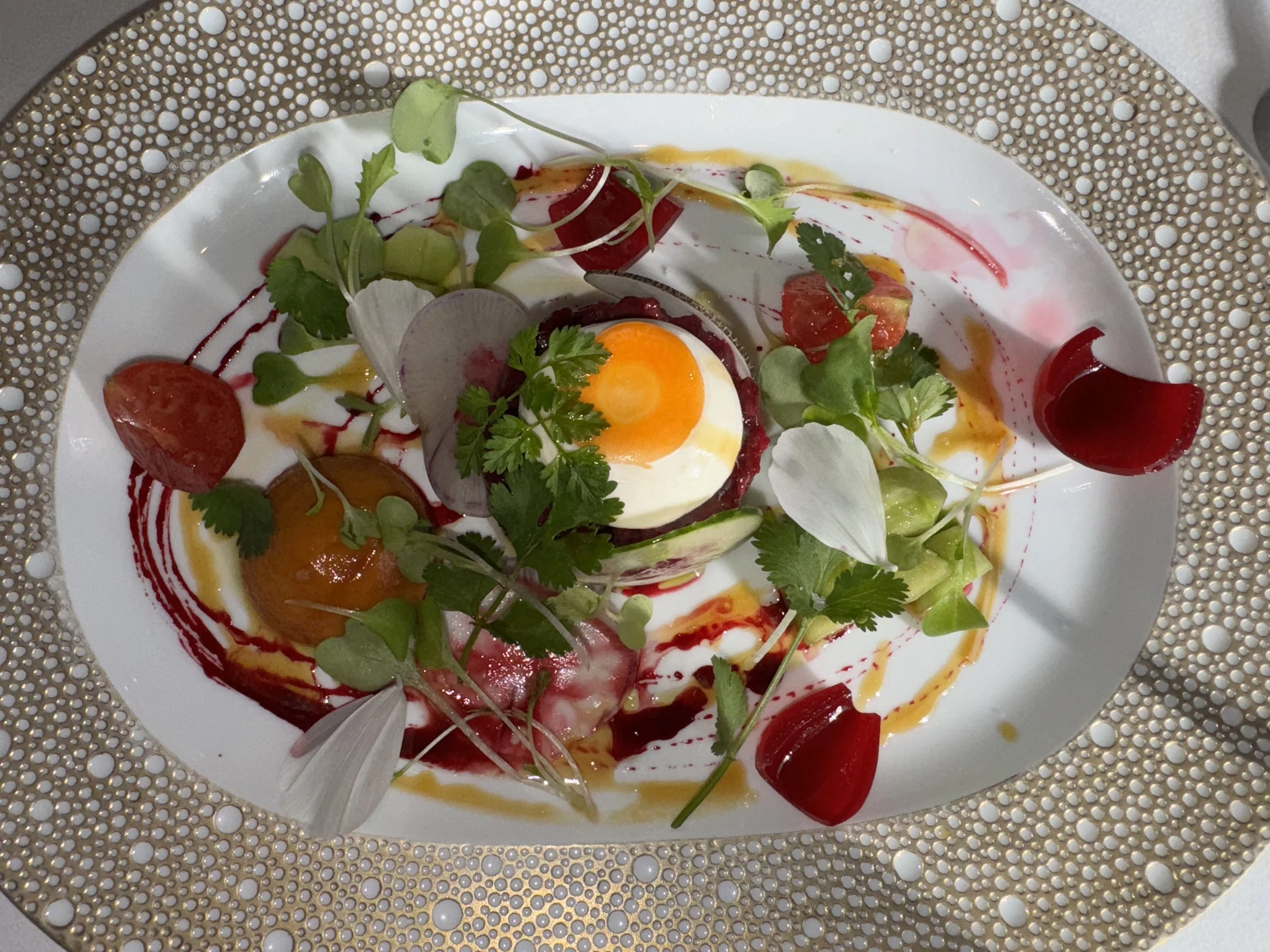
Walking into Arpège felt like walking into a museum. When I arrived for my lunch reservation, there were already diners, but it was quiet, people speaking in hushed voices as if not to disturb the sanctity of this culinary temple. White walls sparsely painted with green foliage, the pop of rich maroon leaves painted onto the plate setting, and a small gourd on my table because it was fall. The staff was friendly and helpful, if a little more muted than the team at Le Clarence. But I sat there for four hours as the sun shifted into that golden fall afternoon hue, and I was at such peace. At the end of the meal, Alain Passard himself came out to greet the remaining diners — and for a restaurant that feels like a home for great art, Passard had this warmth that completely contradicted the stillness of the room.
Arpège is Passard’s love letter to vegetables. Since 2001, he has steadily moved the menu away from meat, then fish, and now the kitchen is entirely plant-based. When I visited in October 2024, he was still serving fish — I had a Dover sole that I can still taste when I look at photos — but that has since changed. It is now exclusively vegetables.
How can a restaurant serving only vegetables ever be worth it, you may ask. To some, it may not be worth it and that’s okay. Arpège may not be for you. For me, I appreciate what Passard seems to be saying — vegetables can be the star if you know how to do it. It’s the same audacity as Enrique Olvera sending out a plate of mole as the coup de grâce at Pujol — a chef saying, trust me, I’m that good. I love the stubbornness about it, the commitment Passard has to vegetables. Would I go back again just to eat vegetables? Yes, yes I would.
3 Michelin stars; World’s 50 Best 2024 (#45); La Liste 2025
The Favorites
Clos d’Astorg
Clos d’Astorg is one of my favorite restaurants in the world. A husband and wife operation that opened in 2024, it is pretty much all locals, moody and intimate, and the kind of food that makes you go back the next night. I went two nights in a row. It deserves more than a few lines — read all about it in its own post in my Food Diaries.
Parcelles
Parcelles is a classy classic French bistro — wooden chairs, white tablecloths, tiled floors, and floor to ceiling windows letting in the light from the narrow street in front. Warm and welcoming, it was filled with locals during the weekday lunch I was there. The menu is French in its bones but not rigidly so — there’s an Italian influence running through it that keeps things interesting. I started with the winter roasted vegetables and finished with the homemade gnocchi with sage butter and crispy fried sage, simple and delicious — the kind of cooking that makes you feel warm and fuzzy even when it’s cold outside.
De Vie
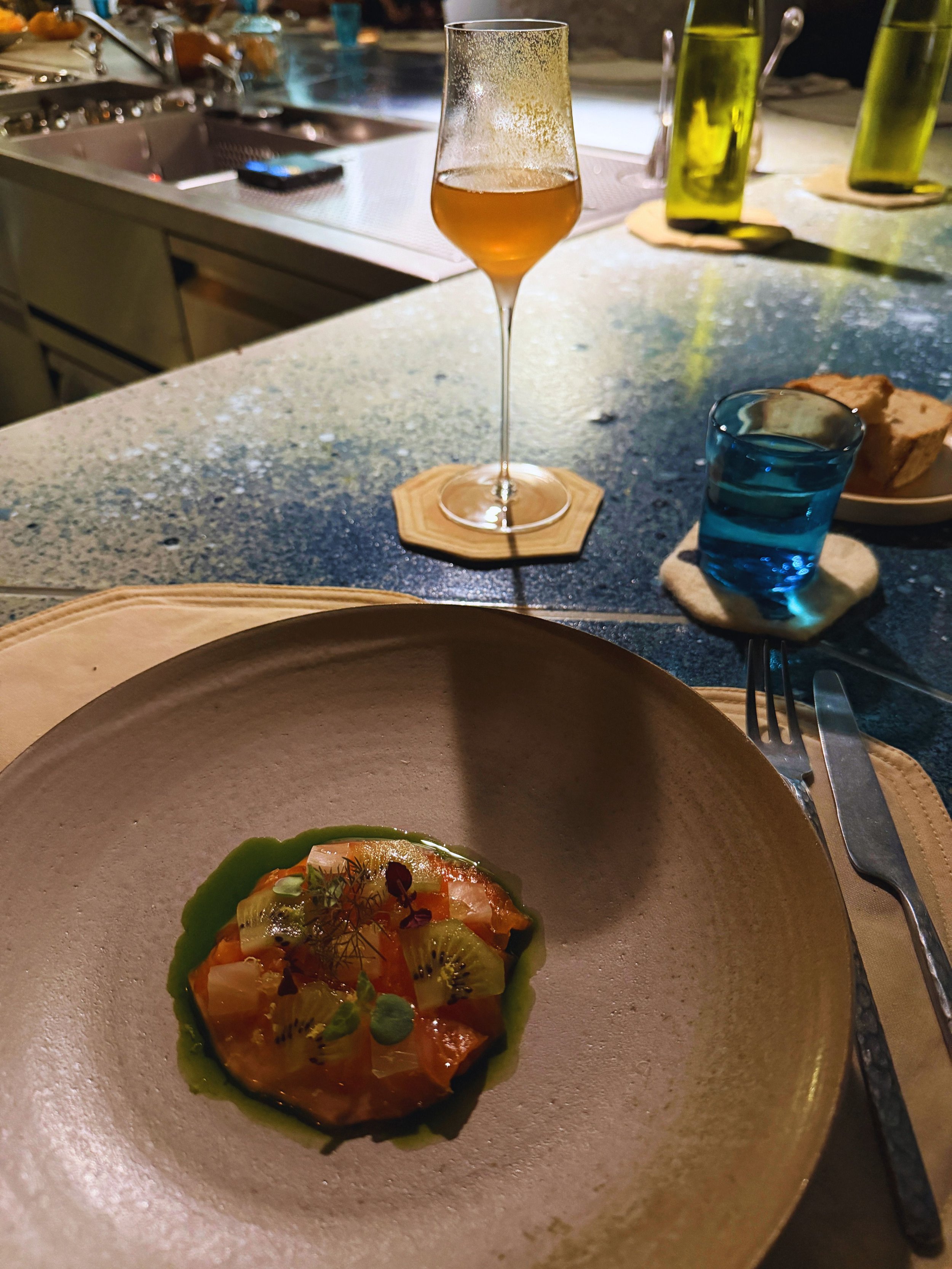
De Vie is one of the coolest concepts in Paris right now — a cocktail bar and tasting menu experience from two alums of Little Red Door, one of the World’s 50 Best Bars. Chef Adam Purcell, formerly of Frenchie, runs the kitchen, and the food and cocktail menus are designed to complement each other — inventive small plates paired with craft cocktails made without ice. It’s intimate, lively, and personal, all twelve seats at a single bar counter with bartenders who double as your servers and hosts.
Restaurant Eels
Restaurant Eels is the kind of place that lets the food do the talking. The menu is seasonal, so what you get depends on when you go. When I was there, the marinated scallops starter was one of the best bites of the entire trip — light and almost buttery, balanced by a tart creamy sauce, a touch of sweet acidity from the clementine, and just enough earthiness from the endive to ground it all. Absolute perfection. Restaurant Eels offers both lunch and dinner tasting menus at €89 — a steal for five courses at this level. I did the three-course lunch option for just €39, which is almost criminal.
Frenchie Bar à Vins
I haven’t been yet, but people I trust for Paris recommendations — a Parisian friend, a friend who goes every year, and the owner of my favorite restaurant in the city — has pointed here independently. That kind of convergence means something. The wine bar sister to the Michelin starred Frenchie restaurant across the street, Frenchie Bar à Vins is lively, walk-in only, and serves small plates with an excellent wine list.
The Everyday
Septime la Cave
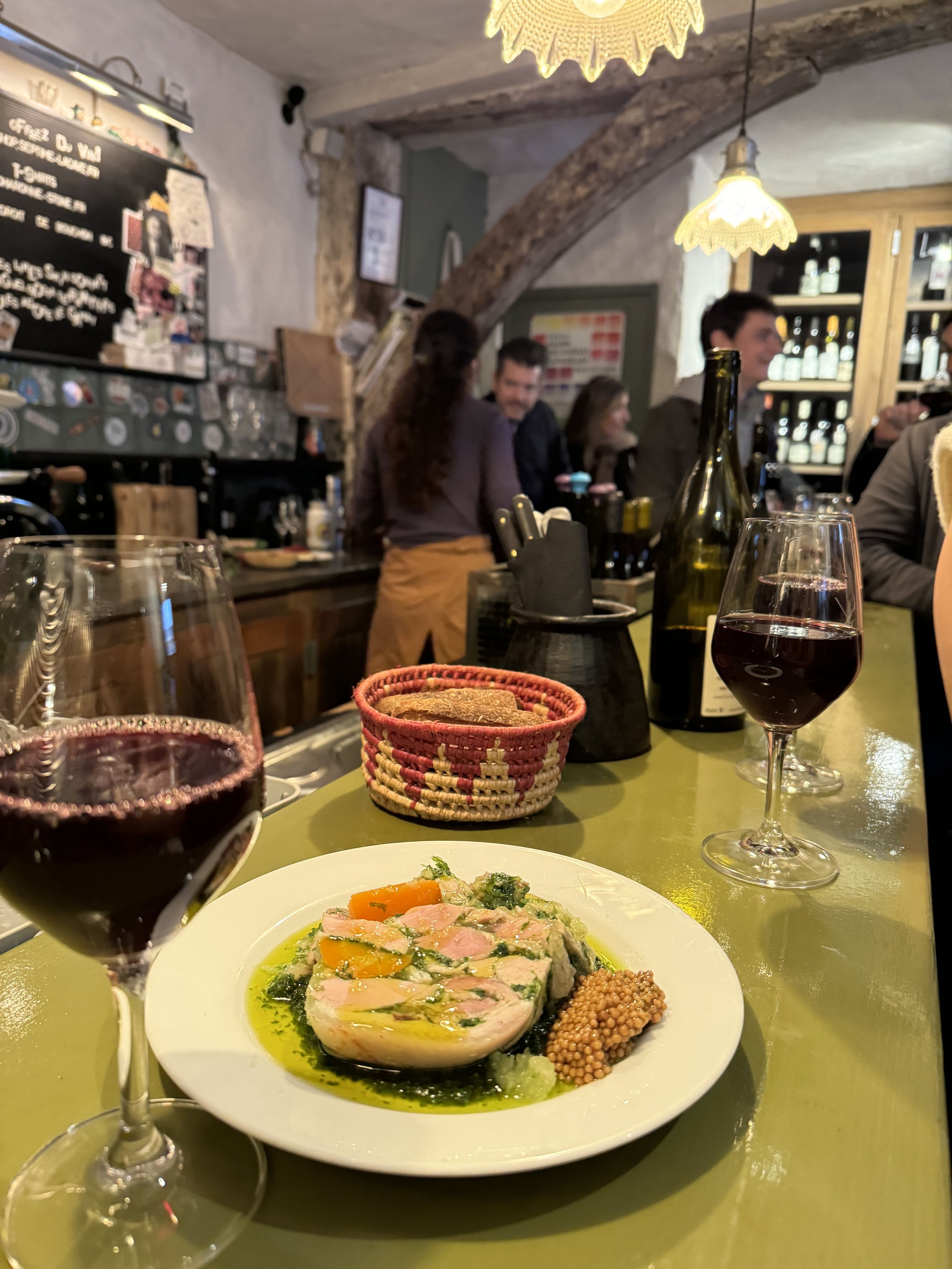
Septime la Cave is the natural wine bar from the team behind Septime, one of the hardest reservations to get in Paris. Tiny, standing room only, and entirely local — bottles of natural wine from small producers line the walls and the staff will walk you through them happily. The perfect afternoon spot for a couple glasses of wine with friends.
Mamiche
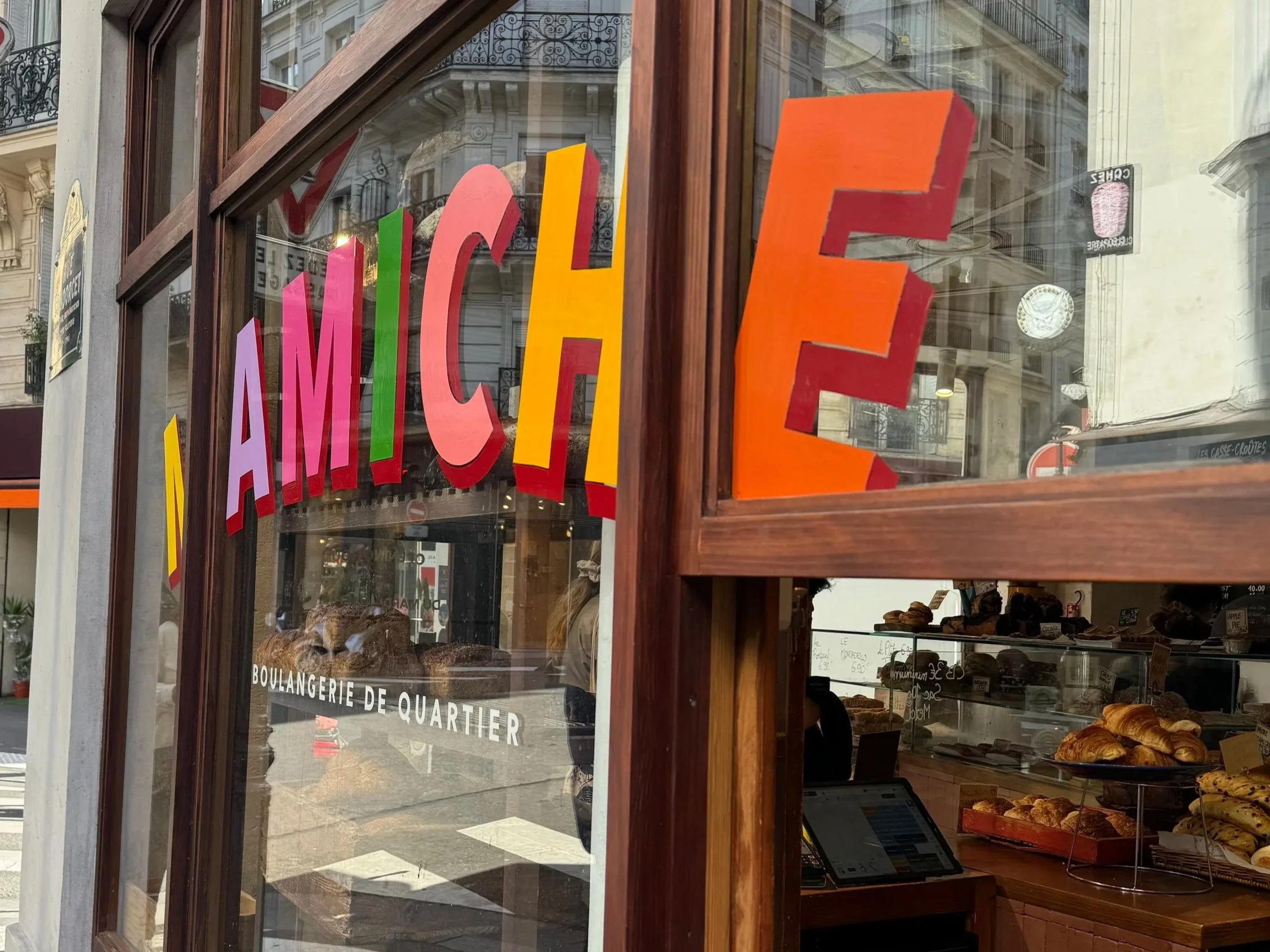
Mamiche is the neighborhood bakery you’ll want to start every Paris morning at. Women-owned and beloved by locals, it has locations in the 9th and 10th arrondissements and does everything well — croissants, brioche, cinnamon rolls, and sandwiches. There will be a line, but it’ll be worth it.
Mamiche
Mamiche is the neighborhood bakery you’ll want to start every Paris morning at. Women-owned and beloved by locals, it has locations in the 9th and 10th arrondissements and does everything well — croissants, brioche, cinnamon rolls, and sandwiches. There will be a line, but it’ll be worth it.
Breizh Café
If you’re going to eat a crêpe in Paris — and you should — Breizh Café is where to do it. Founded by a Breton who lived in Japan, it’s known for organic buckwheat galettes with first-rate ingredients and an extensive Breton cider list that actually makes you think about what you’re drinking.
Marché Couvert des Enfants Rouges
The oldest covered market in Paris, Marché des Enfants Rouges is a maze of food stands and small restaurants — Moroccan, Japanese, Lebanese, Italian, French — all under one roof. A great spot to graze. Inside, don’t miss Le Boucher de Paris for their croque monsieur and steak tartare.